
How to Choose an Amber Tesbih: A Buyer's Guide to Kehribar Prayer Beads
By Cekin Amber
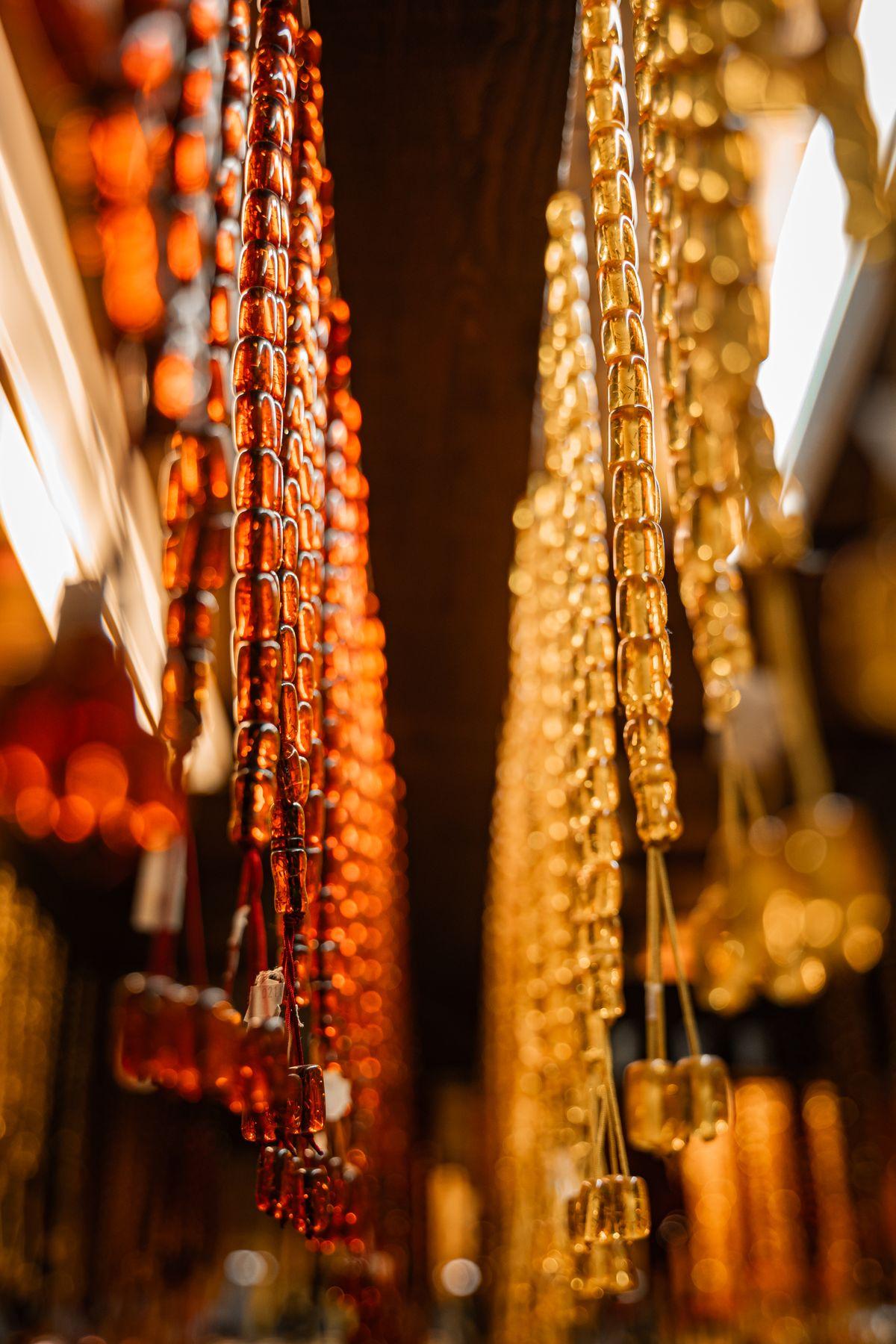
Choosing an amber tesbih is a personal decision — the beads will pass through your fingers thousands of times, so they need to feel right. If you already know what makes an amber tesbih special, this guide takes the next step: how to actually choose and buy one. Here is what to look at before you decide.
1. Decide on the bead count
Traditional tesbih come in two counts, plus the head pieces:
- 33 beads — the most common and practical size, used three times to complete 99 recitations. Comfortable to hold and carry.
- 99 beads — the full count in a single loop, longer and more substantial. Prized by collectors and for longer devotion.
- Both are finished with the imame (the elongated head bead) and often a tassel or tepelik (top piece).
If this is your first amber tesbih, a 33-bead set is the easiest to live with day to day.
2. Understand natural vs. pressed amber
This is the single most important distinction for value:
- Natural amber is carved from a solid piece of Baltic amber. Each bead has its own subtle variations in color and inclusion. It is more valuable, more durable, and what serious buyers seek.
- Pressed (reconstituted) amber is made from small amber fragments heated and compressed together. It is real amber, but less valuable, and often shows tell-tale flow lines or an unnaturally uniform color.
- Imitations — plastic, resin, or copal — are not amber at all.
A reputable seller will tell you plainly which one you are buying. (Our full test guide: How to Tell If Baltic Amber Is Real.)
3. Weigh it in your hand
Amber is remarkably light — that lightness is part of why it makes such fine prayer beads. Pick up the tesbih and turn it:
- It should feel warm and light, never cold and heavy like glass, and never suspiciously weightless like thin plastic.
- The beads should be evenly matched in size and drilled cleanly through the center so they slide smoothly on the cord.
- Run them through your fingers: genuine amber beads produce a soft, distinctive click, a sound collectors listen for.
4. Look closely at color and matching
Amber ranges from clear cognac to honey, butterscotch, and rare white "royal" amber. For a tesbih:
- Decide whether you want transparent beads (deep, glowing) or opaque (creamy, butterscotch) — both are authentic.
- In a quality set, the beads are well matched but not identical; small natural variation is a sign of real amber, not a flaw.
- Check that drilling is centered and the holes are clean, with no chips around them.
5. Ask about the source and workmanship
The seller's answers tell you as much as the beads:
- Where is the amber from? Baltic amber is the gold standard for tesbih.
- Is it natural or pressed? A good seller answers without hesitation.
- How was it worked? Hand-finished beads are shaped and polished with care, not mass-produced.
Red flags to avoid
- A price that seems too good to be true for "natural Baltic amber" — it usually is.
- Beads that are perfectly, unnaturally identical in color and clarity.
- A seller who cannot or will not say whether the amber is natural or pressed.
- Beads that feel cold and heavy (glass) or completely weightless and smell of plastic when warmed.
Making your choice
The best amber tesbih is the one that feels right in your hand — warm, light, well balanced, and honest about what it is. Start with the count that suits your practice, insist on knowing natural from pressed, and buy from someone who tells you the source.
We hand-work authentic Baltic amber tesbih in Gdynia, on Poland's Baltic coast. Browse our rosary and tesbih collection, learn how to care for amber, or contact us for a bespoke piece.
More from the Journal
- Amber as a Gift: A Buyer's GuideWarm, personal, and millions of years in the making — amber is a gift with meaning. Here's how to choose the right piece for the person and the occasion.
- Amber Inclusions: Insects and Life Trapped in TimeA mosquito frozen mid-flight, a leaf, a bubble of 40-million-year-old air — amber inclusions turn a gemstone into a time capsule. Here's how they formed.